


Implementation planning and next steps
You've navigated the HRIS selection process! If you've followed this guide, you should have clarity about what you need, who can provide it, and how to make it happen. Now we look at wrapping up the process and setting yourself up for implementation success.
Your decision checklist
Before signing anything, run through this final checklist ensuring you haven't missed anything important:
Requirements alignment: Does your chosen solution actually solve the problems you identified?
Stakeholder commitment: Are your key users genuinely enthusiastic about the change?
Budget reality check: Do your total cost calculations include everything: implementation, training, ongoing support, and potential hidden fees you discovered during evaluation?
Implementation readiness: Do you have a realistic timeline, adequate resources, and clear project ownership?
Contract details sorted: Are licencing terms, support levels, data ownership, and exit clauses clearly defined?
Vendor relationship confidence: Do you trust this vendor to be a good long-term partner?
Define success clearly
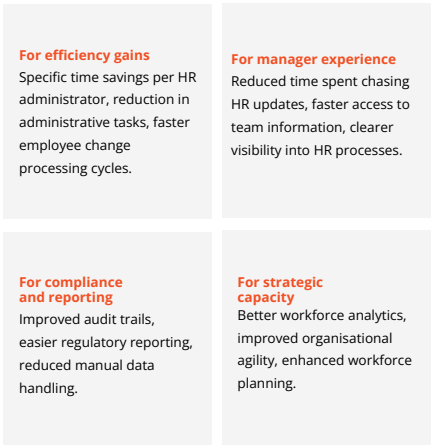
Set clear success criteria before implementation
These should connect to the business problems you're solving, not just feature adoption.
Avoiding common pitfalls
Learn from others' mistakes. Here are the most common reasons HRIS implementations fail:
Insufficient change management
Technical success doesn't guarantee user adoption. Plan communication, training, and support as carefully as you plan technical implementation.
Trying to do everything at once
Focus on core functionality first, then add advanced features once users are comfortable with basics. Overwhelming people with complexity kills adoption.
Inadequate data cleanup
Migrating messy data creates messy processes in your new system. Invest time in data auditing and cleanup before migration.
Underestimating training needs
Different users need different levels of training. One-size-fits-all training usually fits nobody well.
Poor performance measurement
If you don't track progress against your success criteria, you won't know whether implementation is working or what adjustments are needed
Your ongoing success plan
HRIS implementation doesn't end when systems go live. Plan for ongoing success
Regular performance reviews
Monthly check-ins for the first six months, then quarterly reviews against your success criteria. User feedback loops: Regular surveys, focus groups, and feedback sessions to identify issues and improvement opportunities.
Process optimisation
Continuous refinement of workflows and configurations based on user experience and changing business needs.
Vendor relationship management
Regular reviews with your vendor about system performance, upcoming features, and strategic direction.
Team development
Ongoing training for new users, advanced feature training for power users, and keeping current with system updates and new capabilities.